AI Can Get the Math Right and Still Get the Method Wrong.
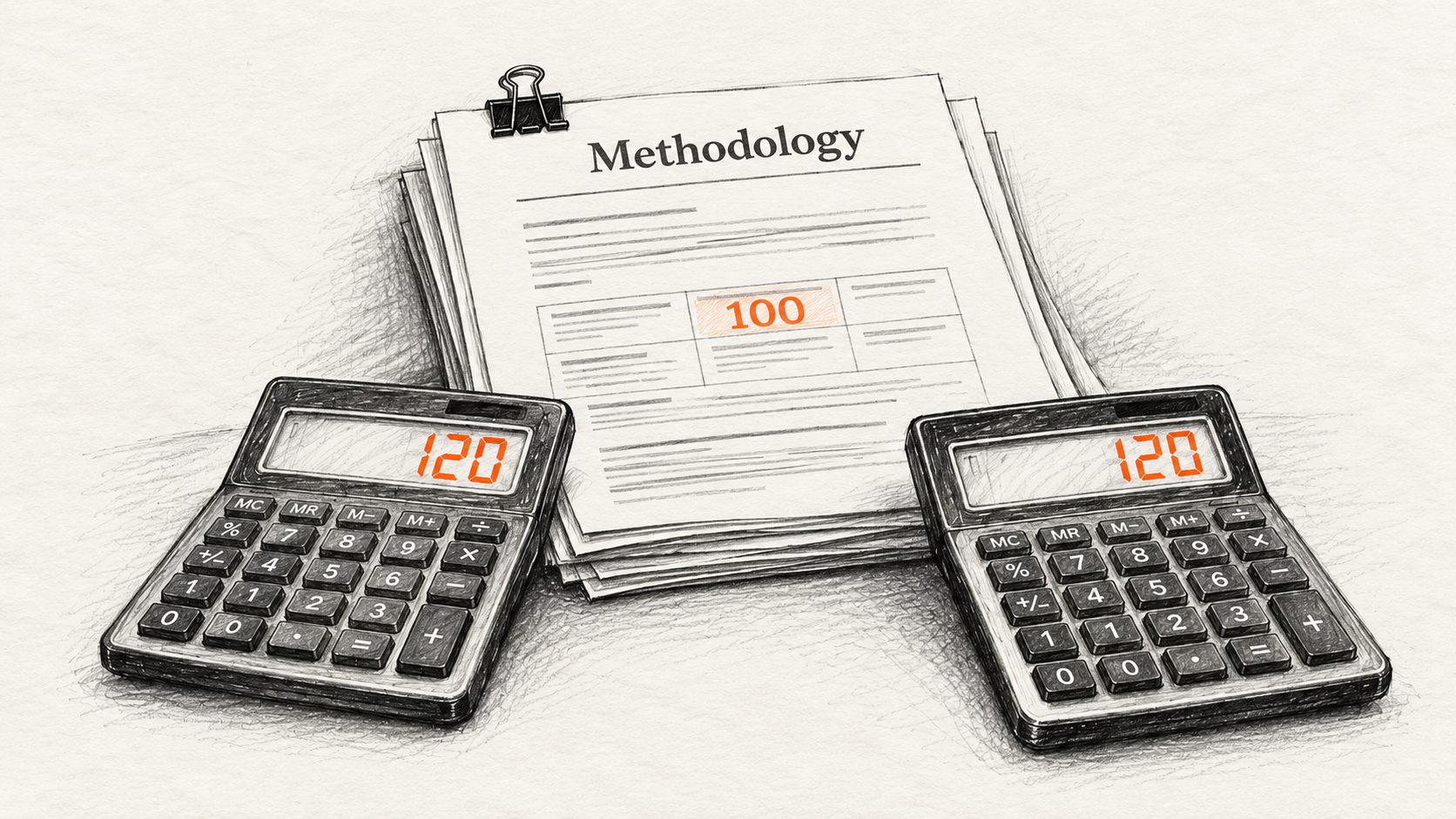
A calculation and its test can agree while sharing the same incorrect interpretation of the source method.
In my work with AI and documented technical methods, the math is often the straightforward part. The harder part is deciding whether the source has been interpreted correctly.
A methodology might provide a formula, but also specify the inputs, conditions and limits that give the formula meaning. When AI turns that document into a calculation, those decisions matter as much as the numbers. A result can be precise, repeatable and wrong for the case it is supposed to address.
Consider a hypothetical measurement instruction: average only readings taken after equipment has stabilized. An AI tool picks the correct formula but includes readings from the warm-up period. Every step of the calculation can be correct. The wrong readings went into it.
That first mistake is easy enough to describe. What happens when we test the result is more important.
Suppose the expected answer is calculated using the same reading of the instruction. The check passes. The system and its reference agree, but both include data the method excludes.
Nothing is necessarily broken in the math or the test. The problem is what the test was asked to confirm.
A matching result is evidence of consistency, not automatically evidence that the method was followed.
This matters because tests carry authority in software work. A good test can show that a calculation runs consistently and produces an expected output. But if that expected output came from the same incorrect interpretation, the agreement cannot validate the interpretation itself.
That is the distinction I pay closer attention to when reviewing AI-assisted technical work. Checking the calculation and checking the source are different tasks. They need evidence that does not simply repeat the same assumption.
There is another question in scientific or regulated work: even if the written method was followed, is it applicable to this case? That can require domain knowledge, authoritative guidance or independent evidence. A passing software test does not establish scientific or regulatory validity.
AI makes it easier to produce a calculation, explain it and reproduce it. None of those outputs, on its own, shows that the source was interpreted correctly. The issue is not whether we should trust AI-generated numbers. It is being precise about what each check actually proves.
My practical approach is to trace the result back to the source before treating a passing test as confirmation. Which instruction defined the rule? Why were these inputs included? Where did the expected answer come from? If it came from the same interpretation, I still need an independent check of the method.
And if that check is unavailable, the limitation needs to be visible. The test may still be useful evidence that the math is consistent. It is not proof that the method was applied correctly.
Before checking the calculation again, check whether it was the right calculation to make.