
VOP
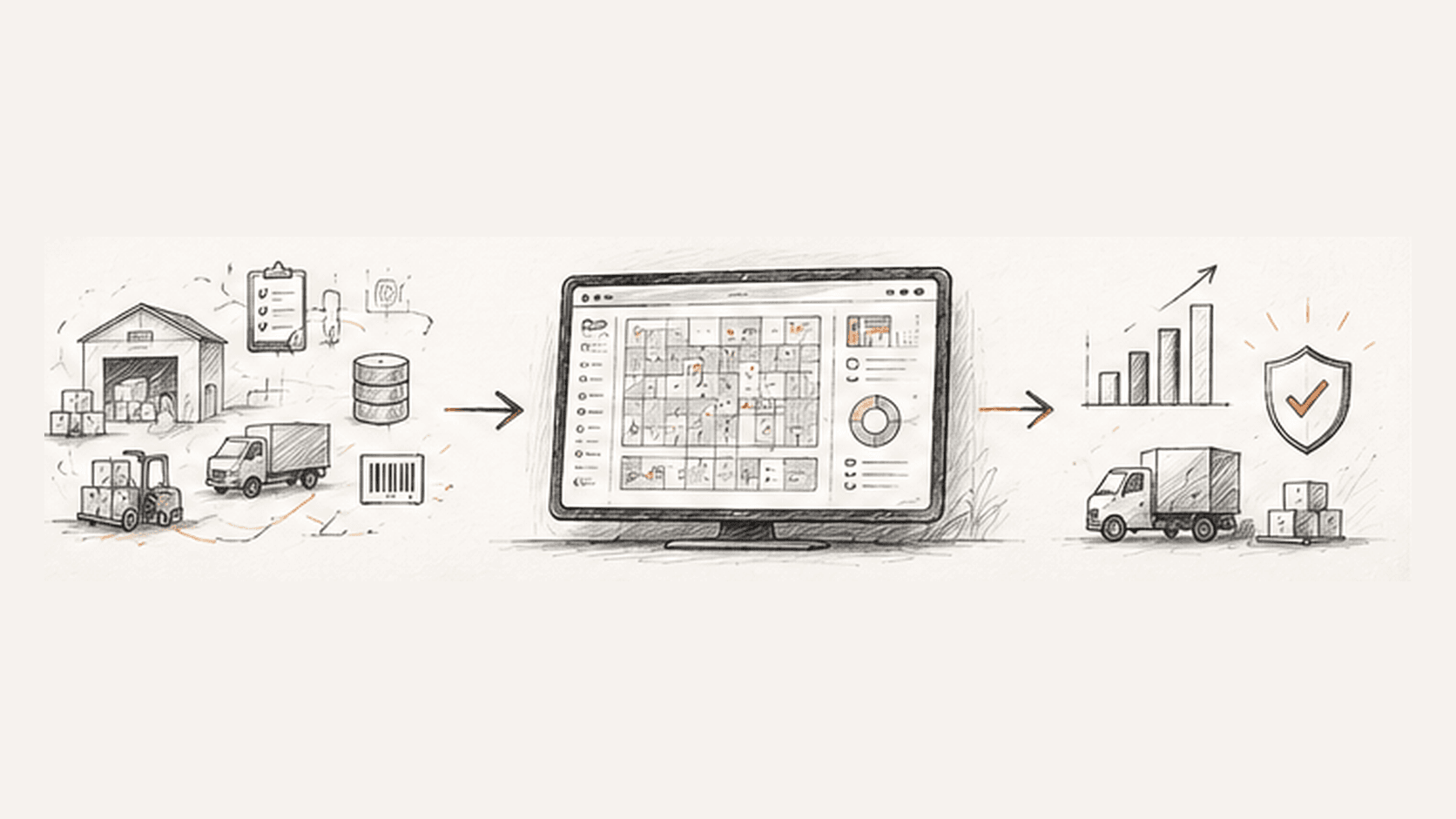
VOP (Vertical Operational Platform) is an operational platform built around real warehouse workflows, combining Telegram-based frontline work with Web administration, reporting, master data, and operational oversight.
The problem
Start with what was actually difficult.
Warehouse operations depend on frequent stock movements being fast enough for daily work while still remaining clear, attributable, and reviewable. The product therefore had to support frontline warehouse actions without separating them from access, master data, reconciliation, reporting, and administration.
Origin
The work began with a practical warehouse-operations need rather than a desire to build a generic WMS or showcase a technology. The product needed to make frequent warehouse actions straightforward while keeping the surrounding records and administration usable.
Context
The current MVP covers the daily warehouse workflow from reference data and access through stock movement, inventory checks, reconciliation, reporting, and operational follow-up. Warehouse users work primarily through Telegram, with focused Mini App interaction where chat alone is not the right interface, while administration and office workflows are handled through the Web application.
Why this name?
Why Vertical Operational Platform?
Warehouse operations are the first implemented domain, but the product is being shaped around connected operational workflows rather than a single warehouse screen or function. The warehouse module brings frontline actions, administration, reference data, reporting, and operational follow-up into one product.
Operational channels
Built around where the work happens.
Warehouse operators do not need to sit in a traditional back-office interface for every action. VOP uses Telegram for frequent operational work and introduces focused Mini App interaction where a conversational interface becomes inefficient — for example when selecting from larger reference lists. Administrative, reporting, and management-oriented work remains in the Web application.
How the product evolved
Real use changed the implementation.
Role: Direct ownership across requirements, product definition, workflow and architecture decisions, implementation coordination, testing, and deployment preparation.
- 01
Start with the actual warehouse workflow.
- 02
Separate reliable reference data from daily stock movement.
- 03
Establish role and warehouse access.
- 04
Exercise core movement workflows and refine the surrounding experience.
- 05
Adjust Telegram and Web interaction where the original interface is not enough.
- 06
Add reconciliation, reporting, import/export, and operational support around the same workflow.
Working result
What exists today.
Warehouse operations
- Receipts, outbound stock movements, returns, and write-offs
- Warehouse transfers with in-transit handling
- Controlled correction of posted operations
Inventory control
- Current stock visibility, inventory counts, and discrepancy workflows
- Receipt-linked expiry information and warnings
- Source-aware stock history
Operational channels
- Telegram-based frontline warehouse workflows
- Focused Mini App reference selection where chat search is not enough
- Web administration, reporting, and office-role workflows
- English and Russian interfaces
Master data and access
- Nomenclature, warehouse, organization, and reference data
- Product and reference search
- Role-based permissions and warehouse-scoped access
- Controlled administrative maintenance
Reporting and data exchange
- Operational reporting and notifications
- Staged Excel stock import
- Current-stock Excel export
- Audit and operational history
Additional operational flow
- Direct delivery without passing through warehouse stock
Validation
How it has been tested.
- Core Web and Telegram workflows are implemented across the current MVP scope
- Automated coverage includes real PostgreSQL-backed tests, responsive and accessibility checks, visual checks, and Chromium, Firefox, and WebKit coverage
- Current work is focused on final deployed-environment checks and user acceptance before production use
Relevant learning
What the work changed.
Operational software is not just a collection of forms. Stock movement, access, reference data, reconciliation, reporting, and the way people actually work have to fit together.Read the Journal