
AI-Techno Jinni: Be careful what you wish for.
A Russian website and a railway illustration taught me to look beyond a convincing AI result and ask whether it fulfilled the wish.
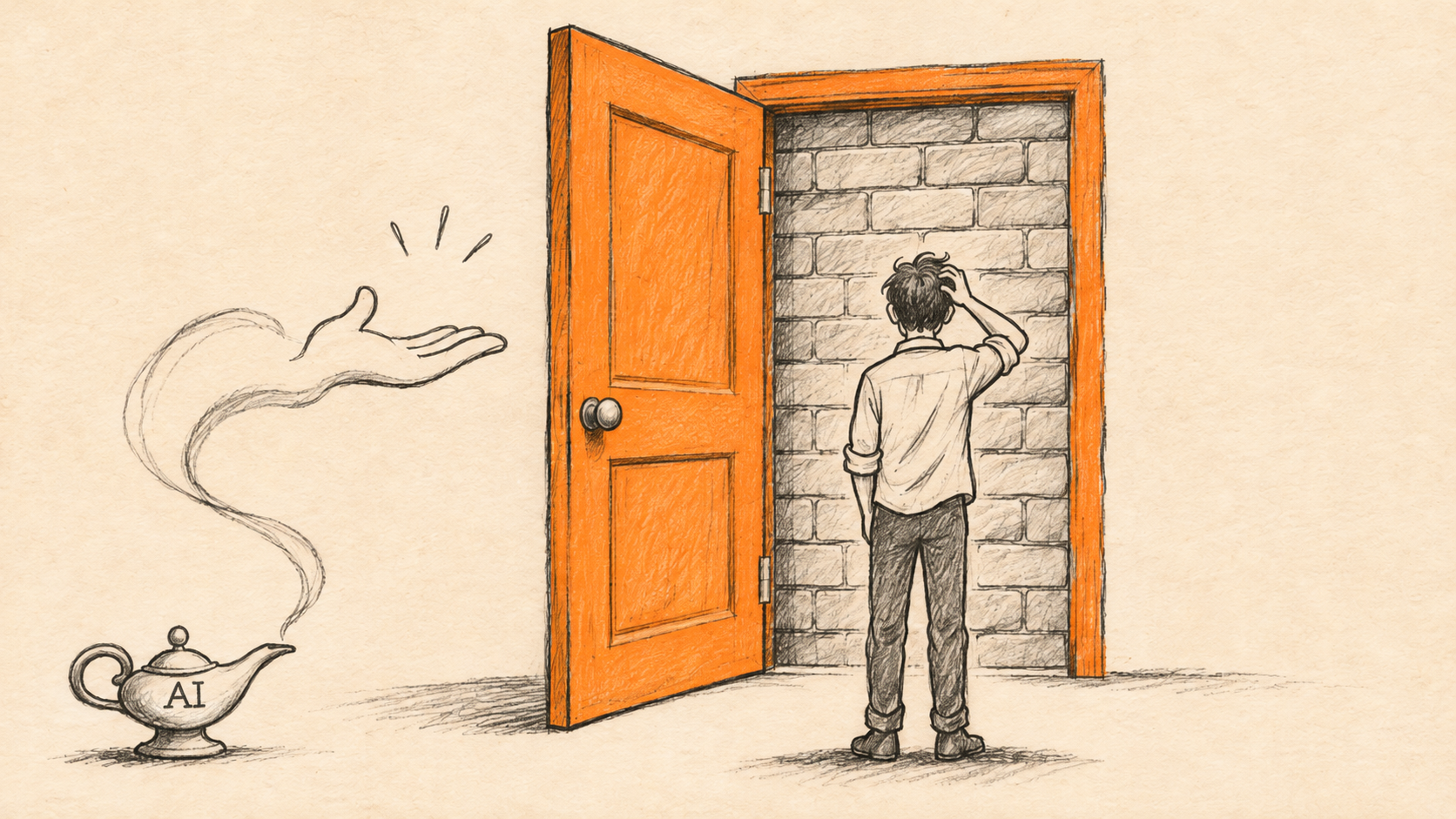
The thing about a wish-granting Jinni is that it can make you feel very clever. You ask for something, it appears, and for a moment you wonder why you ever did things the hard way.
Then you take a closer look.
I had one of those moments when I asked AI to make TechJinni available in Russian. It seemed like a straightforward wish. The website appeared in Russian, the articles were translated, the links worked, and the technical checks passed. My Jinni had delivered. It even had the green checks to prove it.
Then I started reading.
The words were Russian, but the writing didn't sound Russian. English sentence structures had survived the translation, and some of the headlines were particularly awkward. It certainly didn't sound like me. I had a Russian edition of my website, but I wouldn't have wanted a Russian reader to experience it that way. I was annoyed enough to withdraw the entire Russian edition.
Fixing it required more than correcting grammar. We had to stop treating the English sentences as something to preserve and start treating the stories behind them as the thing that mattered. The wording could change completely, as long as the meaning, experience and voice survived. Eventually, we had a Russian edition I was comfortable publishing again. The interesting part wasn't that AI had made mistakes. It was how complete the result had looked before I noticed them.
And this wasn't the first time my Jinni had pulled something like that. For another Journal article, I wanted an illustration of a railway. Some tracks were blocked, others remained open, and the train needed to pass through a station and continue its journey.
AI gave me the train, tracks, blocked routes and station. It also made the station the end of the railway. Everything was there, except the point of the picture.
This one was particularly irritating because I had explicitly said the tracks needed to continue beyond the station. The problem wasn't an unclear wish. The instruction was there; the result simply hadn't respected it. We corrected the image, too.
I could dismiss both experiences as ordinary AI mistakes, but something about them keeps bothering me. These tools rarely hand me a result that announces itself as incomplete. They produce something polished, plausible and ready-looking. Sometimes that's exactly what I need. Sometimes it's just convincing enough to make me think the work is finished. And that's where the Jinni comparison becomes interesting.
It doesn't need to deliberately twist my words. The apparent magic is enough: I describe something, and a few moments later there's a result in front of me. The easier that becomes, the more tempting it is to confuse getting an answer with getting what I wanted. I'm certainly not giving up the wishes. AI lets me attempt things, explore ideas and make changes much faster than I could otherwise.
But I've learned to ask one more question when the Jinni proudly presents its work. Is this actually what I wished for?
Because sometimes the trick isn't hidden in what the Jinni gives you. It's in how quickly you're willing to believe the wish has come true.