
AI-Techno Jinni: Cost behind every wish.
AI tools cost me money, but coordinating their work also costs me attention and time. I'm learning to weigh both when I choose how to work.
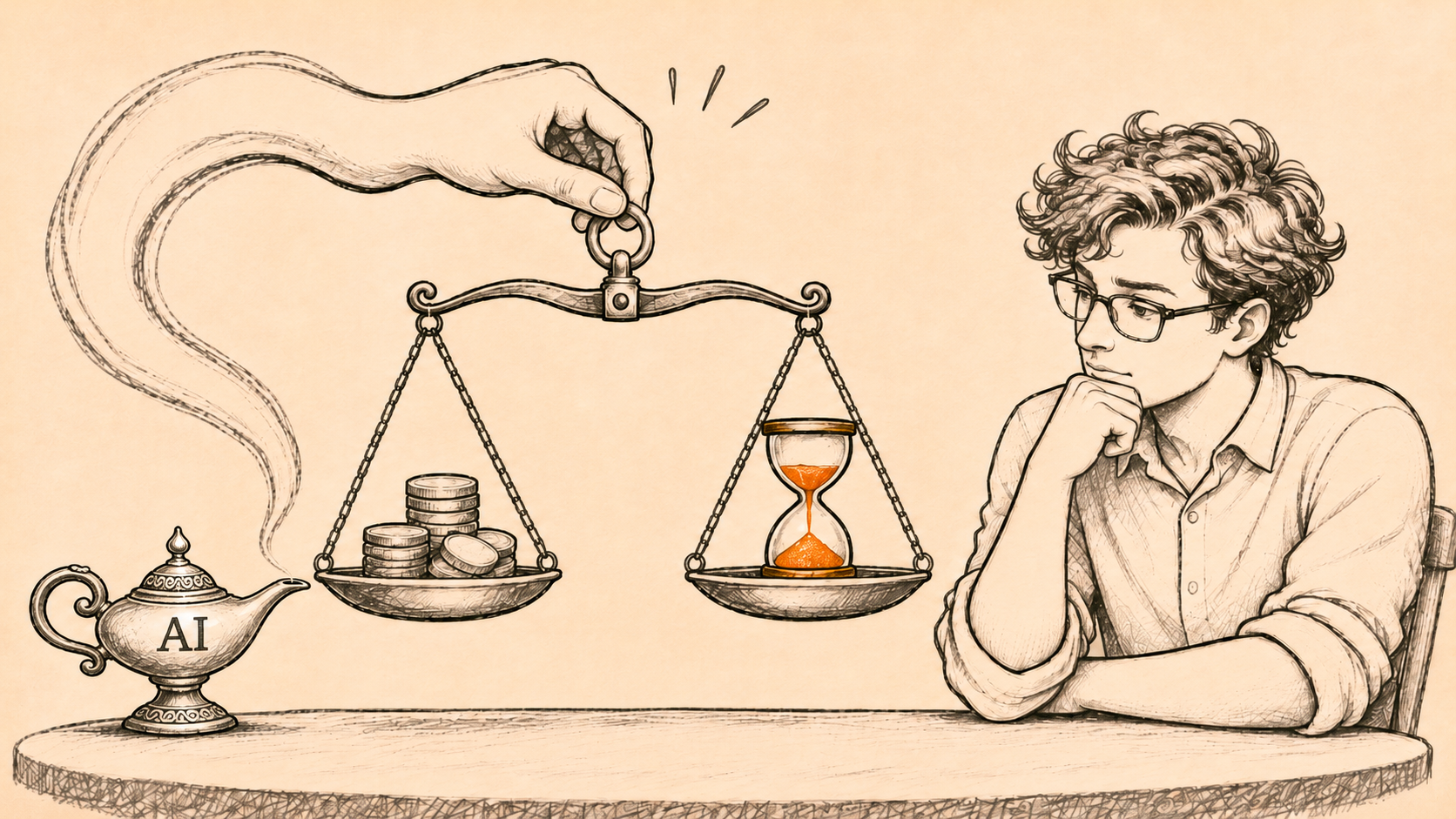
When you have an AI Jinni, the temptation is to think about what it can do next. Ask a question, get a draft, fix some code, try a different idea. The wishes come easily enough that I can forget to ask what each one is costing me.
I was reminded of that when I looked at my usage of a paid AI subscription. The model was capable, and I liked having it available. But I was using only a small fraction of the weekly capacity I was paying for. I wasn't unhappy with the tool. I was wondering whether I was paying for actual work or for the comforting possibility of needing it later.
That question got more complicated once I looked across the other AI tools I use. Some are better suited to coding, others to research or difficult reasoning. Each comes with its own limits, usage windows and costs. It's surprisingly easy to end up with several powerful options and still find yourself thinking about which one to use, when to use it and what to do when you hit a limit.
So I began investigating something different: running capable AI models on a machine of my own. The appeal was obvious. More control over when I could work, and less dependence on cloud allowances for long development sessions. But the hardware research brought me straight back to the same problem. A machine with enough memory and performance is a substantial investment. Electricity, maintenance and the quality of the models I could actually run all matter.
A promising hardware specification isn't proof that the machine will be cheaper, faster or better for my work. It is another option to evaluate, not a magic way to make the cost disappear.
But the more I thought about subscriptions, hardware and model choices, the more I realized that the largest expense might be something none of them were showing me.
My own attention and time.
Before an AI tool can help me, I often have to decide which one should handle the task, explain the context, establish the constraints and make sure it understands what I actually need. Then comes reviewing the output, correcting mistakes, checking what really happened and deciding what to do next.
With one tool, that can be manageable. With several tools working on different problems, those small demands start accumulating. Each new result needs attention. Each interruption means recovering context. Each correction brings another decision, and sometimes I find myself explaining something I thought we'd already settled.
The strange part is that every individual tool may be saving me time. Yet I can still end up spending a significant part of my day coordinating their work.
I don't consider all that attention wasted. Some decisions genuinely need my judgment. I want to remain responsible for what I build, which problems deserve solving and whether the results are good enough. But I don't want to spend my time repeating instructions, carrying context between tools or constantly checking whether another piece of work has moved forward.
There's a difference between using AI to do more work and spending more of my own time managing AI.
That realization has become one of the reasons I've started developing my own AI tools and working toward something larger: a development operating system for AI-assisted work.
The idea isn't to collect even more Jinn or build another impressive interface for talking to them. I want the different capabilities to contribute to actual work without requiring me to personally coordinate every small step. I want to spend more time setting direction, examining important decisions and creating products, and less time keeping the machinery moving.
It's still an ongoing effort, and I haven't fully solved that problem yet. But working on it has changed how I evaluate the tools I already use.
I'm no longer interested only in which model is smartest, which subscription offers the most capacity or which workstation looks most powerful. I want to know how much useful work I can actually get done—and how much of my own attention and time it takes to get there.
Sometimes a more expensive tool may be the better choice. Sometimes a simpler one is enough. Sometimes having spare capacity is valuable even if I don't use it every week. And sometimes the answer isn't another tool at all, but a better way to work with the ones I already have.
I still want my Jinni to make ambitious things possible. That's the whole reason I keep exploring what AI can do. But I've become less interested in how many wishes I can make and more interested in what those wishes leave me free to accomplish.
The Jinni might grant a wish in seconds. But if I spend the rest of my day managing, correcting and verifying it, I haven't necessarily gained the freedom I was hoping for.
That's the cost I'm trying hardest to reduce.
Not just the money I spend on AI, but the attention and time I want AI to give back.