
Working with AI has less ego. I’m not sure that’s always an advantage.
One of the things I have come to appreciate about working with AI is how little ceremony there is around changing my mind.
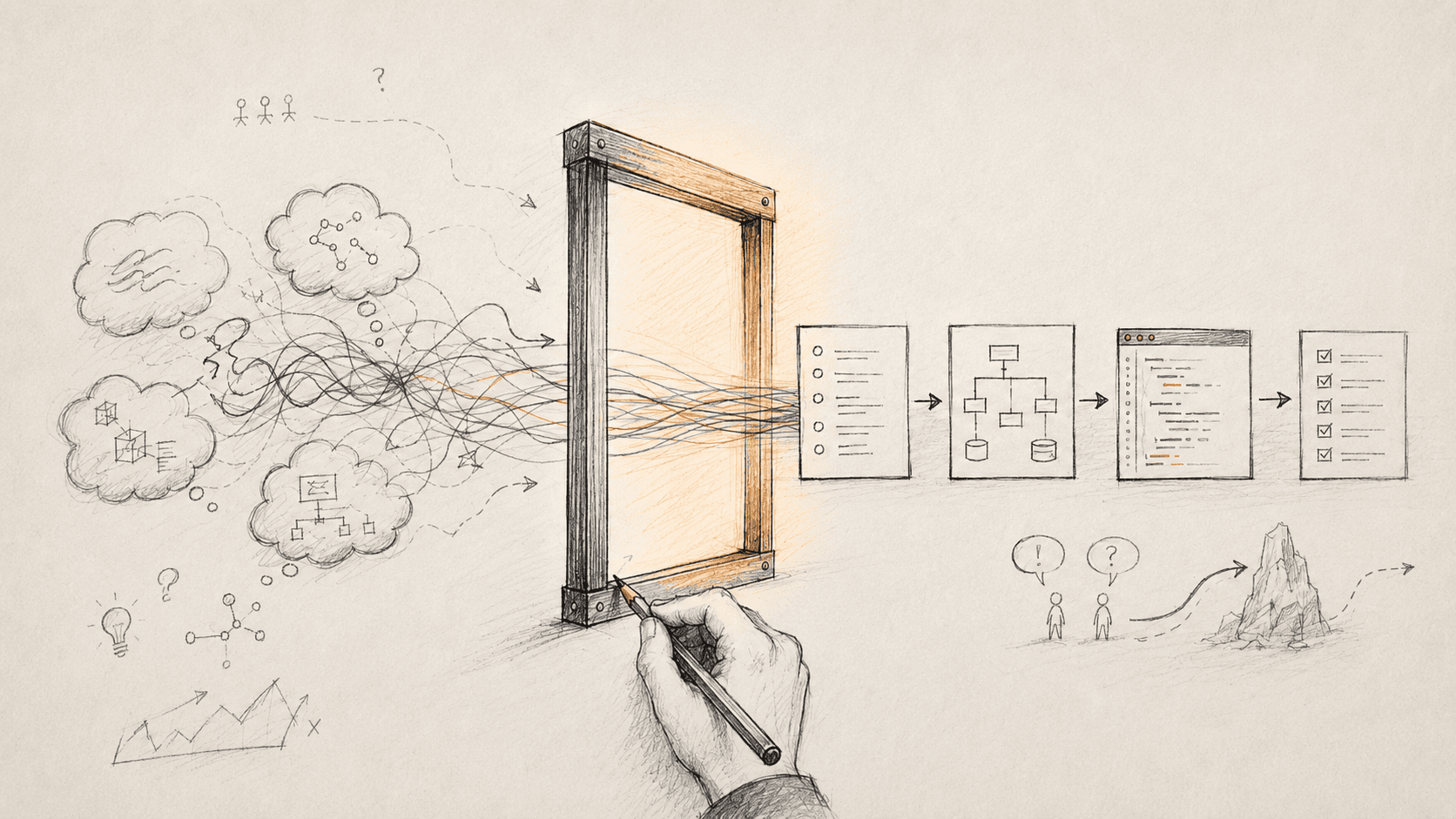
One of the things I have come to appreciate about working with AI is how little ceremony there is around changing my mind. I can spend time developing an approach, look at it again, decide it is wrong and throw it away. There is no awkward conversation afterward. Nobody needs to defend the work because they invested time in it. Nobody feels that rejecting the solution means rejecting them. I do not have to soften the decision because someone is emotionally attached to what they built.
I can simply say: this direction is wrong. Start again. That sounds like a small thing, but in product work it is not.
People naturally develop ownership over their work. I do too. If I have spent enough time thinking through an architecture, writing a requirement or shaping a product direction, it becomes harder to look at it as if it belongs to someone else. The same happens in teams. An idea becomes someone’s proposal, someone’s design, someone’s implementation. Effort accumulates around it. Eventually changing direction starts carrying a cost that has nothing to do with whether the direction is still good.
Working with AI removes a surprising amount of that. I use agents for much more than generating code now. They are involved while I am thinking through product decisions, requirements, architecture, implementation, testing, acceptance and revision. That means I can change direction at almost any point without needing to manage the interpersonal consequences.
There is something genuinely useful about this lack of ego. It makes experimentation cheaper. It reduces the temptation to keep something simply because a lot of work already went into it. And it makes it easier for me to say something that can still be difficult in product work: I was wrong about this. Then I can move on.
For a while, I mostly saw this as an advantage. I still think it is an advantage. I am just less certain now that removing so much friction is entirely good. Some human friction is obviously unhelpful. People can defend ideas for political reasons, protect territory or resist change because they do not want previous work questioned. I do not miss any of that when it disappears.
But disagreement is not the same thing as ego. Sometimes the person making my work more difficult is also the person preventing me from making a mistake. Someone can look at a direction I am convinced about and simply refuse to accept the premise. Not because I asked them to play devil’s advocate. Because they actually disagree with me.
That distinction has started to matter more to me. I regularly ask AI agents to challenge assumptions, look for weaknesses, identify what I have missed and recheck decisions. They can be very good at this. They can find contradictions I did not see, produce strong counterarguments and tell me that a proposed solution is overcomplicated or poorly supported. So the problem is not that AI is incapable of criticism.
The uncomfortable part is that I am still directing the interaction. I decide what problem we are solving. I provide the context. I decide which criticism deserves another round of investigation and which one I dismiss. I can keep asking for stronger challenge, but I can also keep pushing toward the conclusion I already prefer. At some point there is a risk that what looks like agreement is actually compliance.
Not necessarily because the agent is simply agreeing with everything I say. The process can contain criticism, alternatives and detailed reasoning. But I can influence the boundaries of that reasoning. If I strongly insist that a certain premise is correct, the work can quickly shift from asking whether the premise is good to asking how to make it work.
That is a very different problem. And AI is extremely useful once the problem becomes “make this coherent.” It can turn a premise into requirements. It can design architecture around those requirements. It can implement the architecture. It can create tests for the implementation. It can review whether the implementation matches the requirements. It can produce a convincing explanation for why the whole thing makes sense.
That entire chain can be internally consistent while the original decision is still wrong. The more of the product lifecycle I involve AI in, the more important this becomes.
A wrong direction does not have to look chaotic. It can look very organised. It can have clean requirements, sensible naming, passing tests and a coherent architecture.
Smooth execution used to feel like evidence that things were going well. I am becoming more cautious about treating it that way. Sometimes smooth execution only proves that a direction can be executed smoothly. It does not prove that the direction deserved to be executed.
This has changed some of the questions I ask while working. I try to separate “did the agent do what I asked?” from “was what I asked actually the right thing to do?” Those questions can look almost identical when the work is moving quickly, but they are not.
I also try to challenge the premise, not only the solution built from it. That means asking whether the direction itself is still justified, whether the acceptance criteria are proving the product or merely proving that the implementation followed instructions, and whether technically successful work should continue at all. That still does not create genuinely independent judgment. I am the one deciding when to ask those questions, and I am still capable of ignoring the answers when they are inconvenient.
That is why I am not convinced this can be solved with a better prompt that says “be more critical.” Requested criticism is useful, but it is not quite the same as another person having their own view of the problem and being willing to defend it.
A human colleague can return to the same objection tomorrow. They can say that they understand my reasoning and still think I am wrong. They can refuse to let a discussion quietly move from “should we do this?” to “how should we implement this?” That can slow things down. Sometimes that is exactly what the work needs.
I do not want to romanticise human disagreement either. People can reinforce each other’s assumptions, and seniority, confidence or politics can suppress challenge just as easily as ego can create it. More people do not automatically mean better resistance.
But working extensively with AI has made me notice how much resistance I can accidentally remove. The collaboration becomes very efficient. I can change direction without hurting anyone’s pride. I can restart work without defending the previous investment. I can admit that something was wrong and immediately begin rebuilding it.
I want to keep all of that. I just do not want the ease of working this way to make every decision feel easier than it should.
There are parts of product work where resistance is waste. There are also parts where resistance is information. I am still figuring out how to tell the difference.
What I do know is that I do not want to recreate human ego inside the process. I am quite happy to have less of that. But I do want something in the work to remain willing to say that the execution may be good, the implementation may be coherent, and the idea itself is still not convincing.